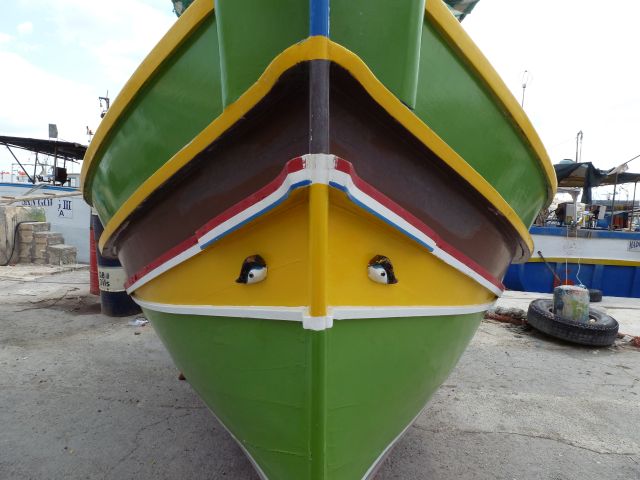
Wasteland: "A broken path to the sea of things left to do, an artifact to be completed, made with new technologies and wandering souls look to the small island, to be reached, not too far away."
(click shows the poem: "The Waste Land" by T.S. Eliot)
Sometimes in life, you need to provide your CV (Curriculum Vitae) and references.
In the past, this might have been a simpler task: "I'm a soldier in that army, a drummer", "I'm an employee of that company, an accountant", "I'm a mechanic at that workshop", and so on.
Effective communication between candidates and recruiters is more complex today due to the emergence of new roles in newly established companies, necessitating an innovative and more meaningful resume. A simple way to achieve this goal could be to add a first page with job descriptions that accurately define the specific industry and roles held."
Many suggest special, often overly rigid formats that also require information about personality, preferences, favorite sports and hobbies, as well as the use of photos and other multimedia content. This is what today goes by the name of profiling.
But the use of standard formats, advocated in many industrial productions, does not seem to be the most suitable method for the CV, because it flattens too much and brings the living individual closer to machines.
Below are some terms used in the world of computer engineering applications, a sort of keywords, which have been in use for about half a century. These include new names and acronyms, such as "automation" in "Auto-trol" and CAD, CAM, CAE, and others, which were shamelessly imported from both America and Great Britain. The relevant industry, the origins and subsequent development are different, as American companies, in a perhaps overly permissive "liberalism", have practiced and continue to practice industrial cannibalism (buy this, sell that). Primarily profit-driven, they have ultimately failed to reap significant rewards, just as British companies, which born primarily with public funding, have not found themselves comfortable in the new globalized economic world, where industrial production has been heavily relocated.
Auto-trol was one of several companies that crossed the Computer-Aided Design and Computer-Aided Design & Drafting boundaries. Established in the Denver area in 1962, Auto-trol’s first product was a digitizer manufactured in the garage of the company founder, Bill Barnes. Mr. Barnes named the company Auto-trol as a shortened version of automated control, which he had called a product he developed in the 1950s. In its early years, Auto-trol manufactured hardware and software for drafting, marrying its original digitizer and flatbed plotter with minicomputers and display terminals.
In 1973, the Hillman Trust purchased Auto-trol. That same year, Auto-trol emerged as a pioneer in the fledgling CAD industry by announcing Auto-Draft, one of the first turnkey graphics systems available. Throughout the 1970s, the CAD industry expanded at a rapid rate, and Auto-trol expanded along with it. In January 1979, Auto-trol’s initial public offering was completed. Also in 1979, Auto-trol became the first company to market technical publishing applications to be used to produce the complex technical illustrations needed for service manuals, parts catalogs, and engineering documentation.
European joint venture
In 1981 Auto-trol established a joint venture with an Italian company, Selenia, to handle the sales and support of the company’s products throughout Europe. This joint venture basically took over all of Auto-trol’s then existing European operations which really were not much. Denny Chrismer was sent to Italy to be Auto-trol’s full-time representative in the joint operation. Although Selenia was headquartered in Rome, the joint venture operated out of Genoa
----------
"JV techology was introduced to ENEL-DCO and the Series 5000 was used to create the very first applications for Plant Schematics production."
"MOSS was a third-party product marketed by Autotrol (by PD)"
----------
The origins of MOSS go back to conferences in the UK in the late 1960's for road design using computers, where engineers exchanged ideas on how to improve on the BIPS application (which used templates to design roads).
oulton from West Sussex County Council, and Eric Malcolmson from NoAn active group of Civil Engineers came up with the concept for string modeling: Gordon Craine from Durham County Council, Jeff Hrthamptonshire County Council.
According to Gordon Craine they got together at a pub in the evening of a Computer Science Society panel meeting in Maidstone, Kent in 1970. They discussed that what they wanted was to design the kerb lines in complex areas, not the cross section on simple lengths of road. Somebody drew on a beer mat what he envisioned. The drawing on the beer mat was the first software design specification of what was to become the future of MOSS.
In 1971 the three succesfully proposed to their respective County Engineers that they work together with common approach to development - but remotely - on a collection of programs that could communicate to a common database. The new package, named MOSS (Modeling Of Surfaces with Strings) used a unique concept of defining each feature in a road, or a survey, as an individual entity, named strings. A collection of strings defined a surface. Hence the concept of surface modeling for roadways was created at this time. MOSS was officially launched at the Public Works Congress in 1974, and at a conference in Coventry in January 1975.
By the 1980's a number of organizations had purchased MOSS, such that there was an opportunity for an independent company to develop the product further and more effectively. MOSS Systems Limited was formed in October 1983 by Jeff Houlton, Gordon Craine, Peter Brock, Stuart Heatherington and Steve Robinson.
----------
"MOSS was preferred in the benchmark for the high-speed railway project in Italy marketed by Italcad (previously Selenia-Autotrol JV). Italian developed applications included the interface MOSS Autotrol-S5k and MOSS-BDIF(FS).
However, Italian designers did not appreciate Moss's new modeling system based on 'Strings' and preferred traditional older design methods.(by PD)"
----------
In late 1996 the North American resellers, Infrasoft Corporation led by Rick Fiery, acquired MOSS Systems. One of the intentions was to aim the development of the MOSS product more firmly towards the needs of the North American market. With Infrasoft in control, the directive for MOSS to work inside AutoCAD and MicroStation was reiterated and MOSS was rebranded to MX. Some engineers in Autotrol civil department had already developed the S5k interface.
The last version of MOSS was MOSS V10.5 .
MX is not officially an acronym, but it led people to believe that it stood for MOSS Extended.
The MOSS story continued in Australia with MX.
Intergraph was founded in 1969 as M&S Computing, Inc., by former IBM engineers Jim Meadlock, his wife Nancy, Terry Schansman (the S of M&S), Keith Schonrock, and Robert Thurber who had been working with NASA and the U.S. Army in developing systems that would apply digital computing to real time missile guidance.
The company was later renamed to Intergraph Corporation in 1980.
One of Intergraph's major hardware projects was developing a line of workstations using the Clipper architecture created by Fairchild Semiconductor. Intergraph was one of only two companies to use the chips in a major product line. Intergraph developed their own version of UNIX for the architecture, which they called CLIX.
In 1987, Intergraph bought the Fairchild division responsible for the chip.
In 1997, Intergraph began pursuing patent infringement litigation against Intel and other computer hardware manufacturers based on the intellectual property developed in Clipper. Intergraph negotiated major settlements with Intel, HP, Texas Instruments and Gateway, earning the company over $394M.
In 2000, Intergraph exited the hardware business and became purely a software company. On July 21, 2000, it sold its Intense3D graphics accelerator division to 3Dlabs, and its workstation and server division to Silicon Graphics.
On November 29, 2006, Intergraph was acquired by an investor group led by Hellman & Friedman LLC, Texas Pacific Group and JMI Equity, making the company privately held.
On October 28, 2010, Intergraph was acquired by Hexagon AB. The transaction marks the return of Intergraph as part of a publicly traded company. As part of the Hexagon acquisition, Hexagon moved the management of ERDAS, Inc. from under Leica Geosystems to Intergraph, and Z/I Imaging airborne imaging sensors from under Intergraph to Leica Geosystems.
On December 2, 2013, the geospatial technology portfolio was split out from under the Intergraph Security, Government and Infrastructure division to form the Hexagon Geospatial division.
On October 13, 2015, the Intergraph Security, Government & Infrastructure division was rebranded as Hexagon Safety & Infrastructure.
On January 9, 2017, the Intergraph Government Solutions division was rebranded as Hexagon US Federal. On June 5, 2017, the Intergraph Process, Power & Marine division was rebranded as Hexagon PPM.
On June 6, 2022, the Hexagon PPM division was rebranded as Hexagon Asset Lifecycle Intelligence.
----------
"Intergraph Plant Deisgn System PDS was used by the majority of italian companies involved in design and contruction of plants in the oil&gas industry, largerly preferred to the rival PDMS.(by PD)"
----------
AVEVA Group plc is a British multinational information technology consulting company headquartered in Cambridge, England. The company started as the Computer-Aided Design Centre (or CADCentre) which was created in Cambridge in 1967 by the UK Ministry of Technology and Cambridge University.
It was listed on the London Stock Exchange until it was acquired by Schneider Electric on 18 January 2023.
HISTORY
The origins of AVEVA start in 1967 in Cambridge, England, with the establishment of the CADCentre, as it was more commonly referred to, and later formally became. It was a government-funded research institute created by the UK Ministry of Technology, with a mission to develop computer-aided design techniques and promote their take-up by British industry. Its first director was Arthur Llewelyn, who initially contracted out the recruitment and management of specialist staff to ICL
The centre carried out CAD research, and some of its early staff members, such as brothers Dick Newell and Martin Newell, went on to become well known in the worldwide CAD community. Dick Newell oversaw the creation of the Plant Design Management System (PDMS) for the 3D process plant design. He later co-founded two software companies Cambridge Interactive Systems (CIS) which was known for its Medusa 2D/3D CAD system, and Smallworld with its eponymous Smallworld GIS (Geographical Information System). Martin Newell later went to the University of Utah where he did pioneering 3D solid modelling work; he was also one of the progenitors of PostScript.[5]
Subsequently the UK government, via the British Technology Group (BTG) established a separate company, Compeda Ltd, to exploit software developed and owned by the government and they took over the marketing and user support of PDMS, while the software continued to be developed
by the CADCentre, with funding from Compeda.
When the UK government decided to privatise (sell) anything that did not need to be government owned, Compeda Ltd was sold to Prime Computer Inc. for a net negative sum of money. Prime Computer decided that PDMS had no commercial value or future and returned the marketing rights for the product to CADCentre.
CADCentre became a private company in 1983, was the subject of a management buyout in 1994 under the leadership of its first managing director, Dr. Bob Bishop, and became a publicly quoted company in 1996. It changed its name to AVEVA in 2001.
AVEVA has introduced the latest version of PDMS is AVEVA Everything 3D (E3D). AVEVA Everything 3D has been introduced with the new UI and with advanced functions.
----------
"Pdms was used in Italy and in international projects, also by companies of ENI group, but Intergraph products were mostly preferred (by PD)."
----------
Schneider Electric's industrial software business combines with AVEVA
On 1 March 2018, AVEVA agreed to merge with France-based Schneider Electric's industrial software business in a multi-step reverse takeover. Schneider Electric became the largest shareholder with a 60% ownership interest.
On 21 September 2022, Schneider agreed to a full takeover of AVEVA by paying about 3.87 billion (US$4.4 billion) for the remaining equity, valuing the whole of AVEVA at around 9.48 billion (US$10.8 billion). The company confirmed that the final day of trading in its shares prior to completion of the takeover would be 17 January 2023. On January 18, Schneider completed the acquisition of Aveva.
Computer applications have not had an easy time, in contexts more concerned with protecting jobs, often obtained through illegal practices, where the sole objective of easy profit prevails. The most complex projects have been carried out by the most advanced and powerful foreign companies, while local entities have always lagged behind, wasting huge resources. Universities, also plagued by similar problems, have failed to provide effective support, always responding late, often anachronistically and disconnected from the industrial world and society at large. These dire outcomes have also been achieved with the support of corruption and politicians interested only in the "consensus" of unsuspecting citizens, to obtain the best electoral results. They often speak too many conflicting languages and propose unexpected deviations. But hope, sometimes represented by a lifeboat, does not abandon us; we often witness unexpected changes, even positive ones, that foster more favorable developments. Who knows?
Comments and reference Area
---------------------------
Documents
by David E. Weisberg
Purdie_23rd Symposium_1985
by David E. Weisberg
Images of concern
Helicopter

Offshore

Aerospace

Automotive


Power

High Speed Train

Plant (SW to Real)


The Power of Nature

lifeboat: "providence"